
Casey Griffin · 12 September 2026
Navigating Knowledge Organization Challenges in Professional Note-Taking Environments
Professionals across industries face mounting difficulties when managing the volume of information that accumulates in note-taking systems, and data from multiple studies shows that retrieval failures often stem from inconsistent categorization practices rather than tool limitations alone. Researchers at various institutions have documented how fragmented storage leads to duplicated efforts while workers spend significant time searching for prior entries, and this pattern holds across sectors from legal services to scientific research labs.
Core Organizational Hurdles in Digital Environments
Information overload occurs when users accumulate thousands of notes without clear relational structures, and evidence from workplace productivity analyses indicates that this accumulation correlates with longer task completion times because context gets buried under chronological or alphabetical lists. Those who study knowledge management note that tags and folders provide partial solutions yet frequently overlap in ways that confuse retrieval, while metadata fields remain underutilized because entry protocols lack standardization across teams. Observers point out that version control issues compound these problems when multiple contributors edit shared documents without clear audit trails, and figures from enterprise surveys reveal that such conflicts account for a measurable portion of lost productivity hours each quarter.
Another persistent challenge involves cross-referencing between projects, because notes created in isolation rarely include explicit links to related materials even though later analysis often requires those connections. Experts have observed that this gap becomes especially pronounced in long-term initiatives spanning multiple years, where institutional memory relies heavily on individual recall rather than system-supported navigation. Studies indicate that professionals who implement consistent linking practices early in their workflows experience fewer instances of duplicated research, yet adoption rates remain uneven due to the initial time investment required for setup.
Practical Approaches to Categorization and Retrieval
Hierarchical folder systems work best when combined with flexible tagging schemes that allow multiple access points to the same content, and research indicates that hybrid models outperform single-method approaches in environments wth high note volumes. People who maintain dedicated index notes for major topics often find faster entry points into their archives, whereas those relying solely on search functions encounter limitations when queries depend on precise terminology that may vary over time. Data shows that regular review cycles help surface outdated or redundant entries before they clutter active workspaces, and organizations that schedule quarterly audits report improved overall system coherence.
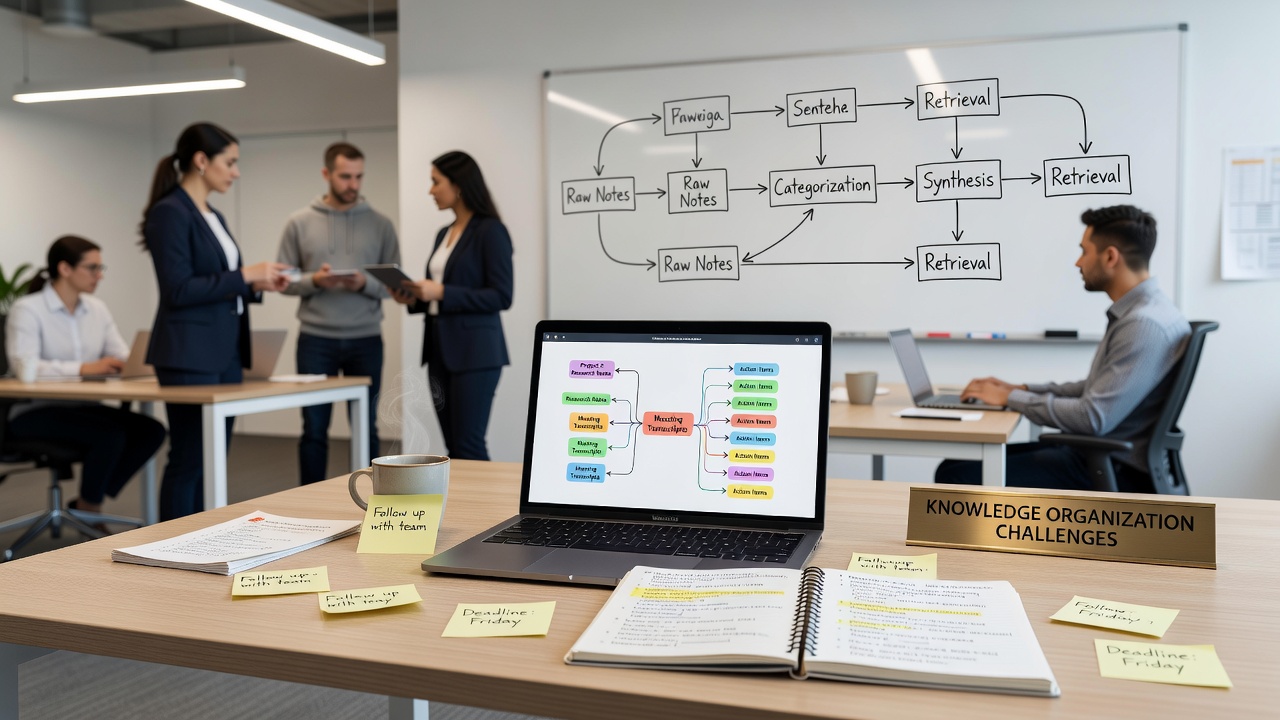
Metadata standards provide another layer of organization when fields capture dates, sources, and project affiliations at the point of creation, and analysts have found that this upfront effort reduces later cleanup requirements substantially. Those who've examined large-scale implementations note that training programs focused on consistent metadata practices yield higher compliance rates than ad-hoc approaches, while automated suggestions from some platforms can further streamline the process without replacing human judgment entirely.
Technology Integration and Emerging Patterns
Modern note-taking platforms increasingly incorporate graph-based visualizations that surface connections between entries automatically, and reports from technology adoption studies suggest these features help users identify overlooked relationships in their data. Integration with calendar and task management tools adds temporal context that pure note systems often lack, although compatibility issues between different software ecosystems can create friction during transitions. In September 2026, updates to several leading platforms introduced enhanced AI-assisted clustering that groups related notes based on content similarity rather than user-defined rules alone, and early user data indicates measurable improvements in retrieval speed for those who activate the feature.
Security considerations also intersect with organization strategies because sensitive notes require access controls that do not impede legitimate sharing among collaborators, and guidelines from regulatory bodies such as the OECD digital policy reports emphasize balancing protection with usability. Professionals in regulated industries often adopt role-based permissions layered onto their existing categorization schemes, which maintains structure while satisfying compliance requirements.
Conclusion
Effective navigation of knowledge organization challenges in professional note-taking environments depends on consistent application of categorization methods, thoughtful use of available tools, and periodic system reviews that adapt to changing project needs. Evidence from multiple research sources demonstrates that structured approaches reduce retrieval time and minimize duplication, while emerging technologies continue to offer new ways to surface connections within growing datasets. Those who establish clear protocols early and refine them regularly position their workflows to handle increasing information demands without proportional increases in search overhead.